 January 9, 2026
 11 min read
Commercial Invoice OCR: The Future of Modern Import-Export Processing
Commercial Invoice OCR is transforming the world of international trade, which moves at an incredible speed every single day. In this fast-paced global environment, the commercial invoice serves as the primary heartbeat for the movement of goods across borders. Whether you are shipping high-tech electronics from Asia or luxury fashion from Europe, this document is the essential bill of sale that defines the commercial relationship between the seller and the buyer. However, as global trade volumes reach new heights, the reliance on traditional, paper-based systems is becoming a significant operational liability for firms everywhere.
Today, every single global trade deal requires a legally compliant commercial invoice to pass through customs successfully. Without a clear and accurate document, products would get stuck at international borders for weeks, leading to massive financial losses and supply chain disruptions. This is why forward-thinking companies are now aggressively pursuing trade document digitization to save time and secure their profits. In the past, workers had to manage thousands of physical paper folders by hand—a process that made scaling a business almost impossible. We are now witnessing a major shift toward a world where paper is no longer a requirement, and AI-powered technology is at the center of this revolution.
Anatomy of a Standard Commercial Invoice
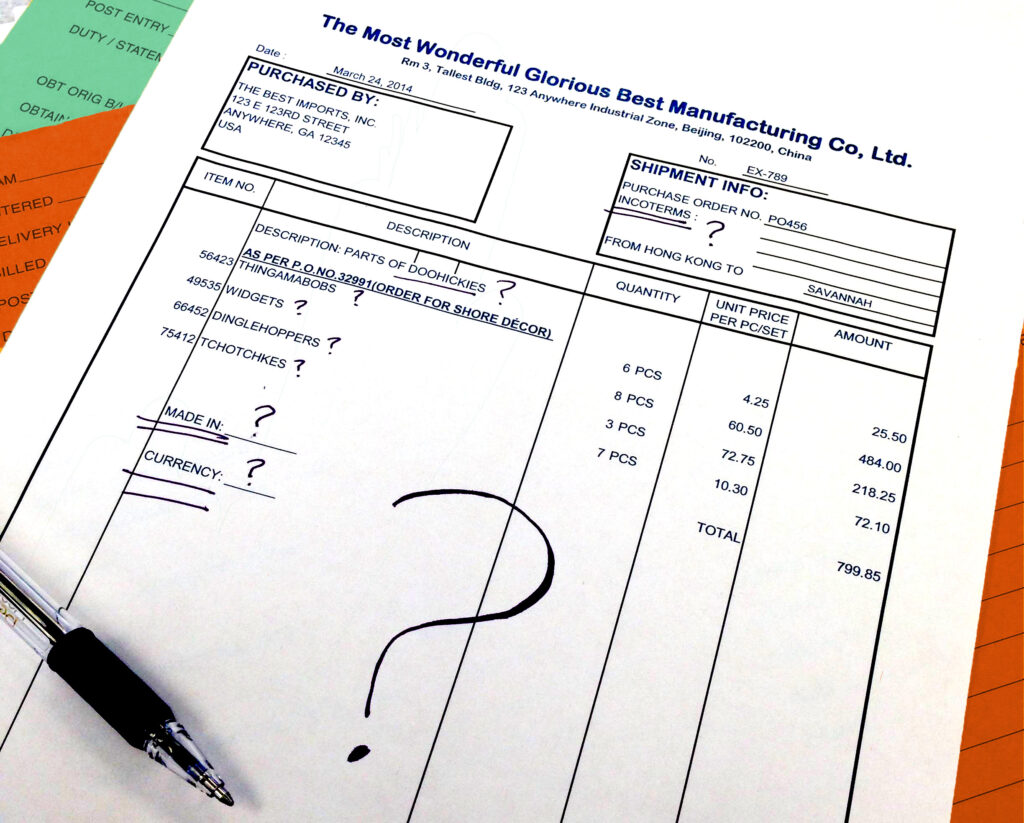
To understand why Commercial Invoice OCR is so critical, one must look at the complex anatomy of a standard commercial invoice. This document is much more than just a simple list of items; it is a legally binding statement of value and identity that customs authorities scrutinize with extreme care.
1. Key Trade Parties and Logistics Details
A standard commercial invoice must list the shipper (the entity sending the items) and the consignee (the recipient). It also includes the notify party, ensuring that the logistics provider or agent knows exactly when and where the shipment arrives. Any confusion in these names at the port can lead to immediate rejections and costly administrative delays.
2. Detailed Product Data and HS Codes
Product details are the most data-intensive part of any shipping document. The invoice lists the quantity, unit price, and a full description of every item. Most importantly, it must include the correct Harmonized System (HS) codes for customs classification. Accurate invoice data extraction is required to pull these complex codes into a computer system perfectly, as an incorrect code can lead to the wrong tax assessment or legal fines.
3. Financial and Legal Terms (Incoterms)
The financial section of the document explains the currency being used, the total value of the shipment, and the Incoterms—the international rules defining who pays for shipping and at what point the risk transfers. Proper invoice data extraction ensures these terms are recorded without human error, protecting the legal integrity of the entire transaction. Customs authorities check every single one of these points to ensure total accuracy before releasing cargo.
Challenges in Manual Commercial Invoice Processing
For many office workers, manual export invoice processing is a soul-crushing and highly inefficient task. Sitting at a desk for eight hours a day, typing rows of numbers and descriptions from a physical page into an ERP system, is not just slow—it is a major bottleneck for any growing company.
The Inevitable Risk of Human Error
In the high-stakes shipping industry, data entry risks are a serious operational threat. It is incredibly easy to hit the wrong key when you are tired or under pressure during a busy peak season. A single typo on a commercial invoice regarding the price, weight, or container number can cause an expensive delay at the port. These mistakes often lead to storage fines and demurrage charges that can cost a company thousands of dollars annually.
Operational Inefficiency and Scalability Issues
Operational inefficiency is the hidden cost of manual work. It takes far too long to manually verify a commercial invoice against a packing list or a purchase order. If a business wants to ship more goods, they are traditionally forced to hire many more people just to type data. This makes the cost of doing business rise much faster than the revenue. Trade document digitization is the only way to break this cycle of administrative bloat.
AI-Powered Commercial Invoice Processing: The Definitive Solution
Smart software is the definitive answer to the challenges of manual entry. The most important tool in this digital toolkit is Commercial Invoice OCR (Optical Character Recognition). This technology allows a computer to “see” and interpret text, meaning a machine can read an invoice just as well as a human eye, but at a thousand times the speed.
Commercial Invoice OCR turns a static photo, a messy scan, or a PDF into actionable, structured data. This is the foundation of modern trade document digitization. But it doesn’t stop at simple text recognition. Modern systems use Natural Language Processing (NLP) to understand the semantic context. The AI can distinguish between a shipping address and a billing address, even if they are placed in unusual spots on the page.
Machine learning further enhances this process by helping the software learn from millions of different layouts from suppliers all over the world. The more documents it processes, the better it becomes at export invoice processing. It remembers the specific quirks of each supplier’s invoice format, ensuring that your data is always captured with total precision.
The Step-by-Step Workflow of AI Invoice Processing
When you implement an automated system, the workflow becomes clean, transparent, and frictionless:
-
Data Capture: The process begins when you receive a new document. You can import it directly from an email attachment, a cloud folder, or an API feed.
-
Intelligent Extraction: This is where Commercial Invoice OCR does the heavy lifting. The AI reads the page and performs invoice data extraction for HS codes, weights, and unit values in seconds.
-
Automated Validation: The system cross-checks the extracted data against other trade documents like the Bill of Lading or Packing List. This ensures that the export invoice processing is legally sound.
-
Human-in-the-Loop Review: If the AI encounters a blurry scan or a torn page, it flags the document for a quick human check. This “safety net” ensures that your data quality remains at 99.9%.
-
Direct Integration: The final data is pushed directly into your ERP, TMS, or accounting software, completing the trade document digitization cycle.
Tangible Benefits of AI in Commercial Invoice Management
The shift toward AI-driven management offers several massive competitive advantages for logistics firms and traders:
-
Incredible Speed: You can finish an export invoice processing task in seconds. Your invoices no longer sit on a desk waiting for someone to type; they move as fast as your cargo.
-
Major Cost Reduction: Automating repetitive tasks lowers the cost per document significantly. This helps you save a large portion of your administrative and overhead budget.
-
Unmatched Accuracy: Commercial Invoice OCR eliminates the typos that lead to customs rejections. A clean invoice keeps your cargo moving through the border without extra costs.
-
Enhanced Business Intelligence: Deep invoice data extraction gives you access to powerful analytics. You can track supplier performance and find new ways to lower your global logistics costs.
Implementation Strategies and Future Trends

Adopting AI requires a strategic approach. You must choose a tool that offers high accuracy and seamless integration with your current office workflow. Security is also a top priority for any firm handling sensitive trade data. Ensure that your trade document digitization partner follows international standards like GDPR or SOC2 to keep your information private and your company’s reputation safe.
Looking ahead, we see the rise of autonomous trade systems where AI, Blockchain, and the digital commercial invoice intersect. Smart contracts will eventually use invoice data extraction to settle international payments automatically as soon as the goods are cleared by customs at the destination port. Adopting these trends early through Commercial Invoice OCR will give your company a massive advantage in the global market.
Why jpgtoexcelconverter.com is The Right Solution for You?
At jpgtoexcelconverter.com, we are the leading choice for companies ready to master trade document digitization. Our platform uses high-end Commercial Invoice OCR to transform your office workflow from manual to magnificent. We specialize in export invoice processing, allowing you to focus on the strategic growth of your global trade business rather than the minutiae of data entry.
With jpgtoexcelconverter.com, you gain access to the most precise invoice data extraction tools available on the market today. Chúng tôi ưu tiên bảo mật dữ liệu của bạn và đảm bảo rằng mọi tài liệu đều được xử lý với sự cẩn trọng và tuân thủ tuyệt đối. Mục tiêu của chúng tôi là làm cho quy trình làm việc với hóa đơn thương mại của bạn hoàn toàn không có ma sát, giúp bạn tiết kiệm thời gian và bảo vệ lợi nhuận khỏi những rủi ro do lỗi thủ công.
Conclusion
A commercial invoice is more than just a piece of paper; it is the foundation of your entire global strategy. Trade document digitization makes this foundation stronger, faster, and much more efficient. By using Commercial Invoice OCR, you can remove the pain of manual entry and ensure that your export invoice processing is always accurate and ready for customs.
The evolution of trade is happening right now, and it is moving toward a paperless future. Adopting AI for your document processing is no longer a luxury; it is a necessity for anyone who wants to compete on the global stage. Experience the digital revolution today with jpgtoexcelconverter.com and see how easy it is to lead the world in import-export innovation.