 January 28, 2026
 11 min read
Audit Automation is fundamentally changing the financial landscape, providing a critical solution for firms struggling to keep pace with the massive volume of data produced in the modern economy. In today’s high-speed business world, traditional manual auditing methods are becoming obsolete almost overnight. Teams that rely on paper-based records and manual entry find themselves trapped in a slow, error-prone cycle that hinders accuracy and efficiency. To thrive in this digital era, organizations must embrace Audit Automation to transform their financial workflows and achieve total data transparency.
The primary challenge for modern auditors is the sheer scale of information. Companies now produce millions of transactions every day, making it physically impossible for human teams to check every record by hand. This is where Audit Automation moves beyond simple software; it integrates advanced artificial intelligence into the entire audit life cycle, enabling machines to learn and process complex financial tasks with near-perfect precision. This evolution allows the software to manage the audit process from start to finish, ensuring that quality and speed are never compromised.
The Financial Drain of Manual Auditing
The old ways of working carry a dangerously high risk of human error. Even the most dedicated auditors suffer from fatigue after hours of repetitive data entry, leading to costly mistakes that can damage a firm’s reputation. Audit Automation eliminates this risk by replacing manual labor with precise computer logic.
Furthermore, traditional “sampling”—where only a small percentage of files are reviewed—is no longer a sufficient metric for determining the true health of a company. To solve this, firms must implement audit data analytics to see the 100% picture. This technology allows auditors to examine every single transaction across an entire fiscal year. However, this is only possible if you first digitize audit evidence. Paper files are too slow to search and impossible to organize at scale. Transitioning to a digital, automated system is the first step toward superior quality control.
Core Technologies: The Engine of Change
The heart of this digital shift is Financial Audit OCR (Optical Character Recognition). This technology is the bridge between a physical receipt and a digital spreadsheet.
-
Financial Audit OCR: It reads text from physical invoices and receipts just like a human eye, but at a thousand times the speed. Once you digitize audit evidence, the data becomes searchable and actionable.
-
Natural Language Processing (NLP): NLP helps the computer understand the legal context of contracts. AI can “read” complex legal clauses to identify risks without human intervention.
-
Machine Learning (ML): These algorithms learn from historical adjustments, allowing the system to predict where future financial risks may be hiding.
-
Audit Data Analytics: This engine uses extracted data to guide the auditor toward “Red Flags,” ensuring that human expertise is spent on the most important problems.
Key Functional Areas of Automated Auditing Tools
Automated auditing tools perform tasks that were once considered administrative nightmares. One of the most significant features is automated vouching and tracing, which links source documents to the general ledger automatically. This removes the need for any manual typing from the staff.
Three-Way Matching and Fraud Prevention
Three-way matching verifies Purchase Orders, Goods Received Notes, and Invoices. If these three elements do not align, Audit Automation triggers an instant alert. This level of oversight prevents fraud and ensures that every dollar is accounted for correctly.
Bank Statement Reconciliation
Matching bank feeds with cash books is a common but exhausting task. Automated auditing tools can reconcile these records instantly, saving hours of work every week. By using Financial Audit OCR, paper bank statements are transformed into clean digital files that the computer can analyze with 99.9% accuracy.
The Automated Audit Workflow: A Step-by-Step Guide
To understand the power of Audit Automation, one must see the logical progression of the digital workflow:
-
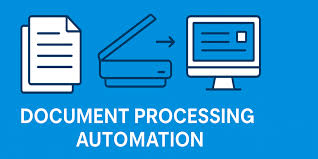
Step 1: Data Ingestion: Clients scan their files and securely upload them to a cloud portal.
-
Step 2: Intelligent Extraction: Financial Audit OCR pulls dates, amounts, and names off the page, mapping them into structured tables.
-
Step 3: Anomaly Detection: The system uses audit data analytics to flag unusual spending or duplicate bills.
-
Step 4: Documentation: The software generates digital workpapers that comply with international standards like ISA.
-
Step 5: Permanent Archiving: All proof is stored in a secure, encrypted digital vault for future regulatory review.
Strategic Benefits for Auditors and Modern Firms
The shift from 1% sampling to 100% testing is the most significant benefit of Audit Automation. It provides total comfort to stakeholders and regulators. Furthermore, Financial Audit OCR eliminates transposition errors, lowering the firm’s liability and improving the “expectation gap.”
Beyond accuracy, there is a major boost in employee satisfaction. Young auditors no longer want to spend their lives doing “grunt work.” By using automated auditing tools, they can focus on high-value advisory work and professional skepticism. Firms that adopt these technologies are far more competitive, offering better pricing and higher quality service than those stuck in the past.
Integration, Security, and Compliance
An effective Audit Automation system must integrate with ERP tools like SAP or Microsoft Dynamics. This creates a seamless flow of data into the audit data analytics engine. Maintaining a digital audit trail is vital for trust; when you digitize audit evidence, every machine action is recorded for transparency.
Security is non-negotiable. Modern tools follow strict rules like GDPR and SOC2, using the best encryption to protect sensitive client data. Financial Audit OCR ensures that even the most confidential information is handled securely, with only authorized personnel granted access. This compliance-first approach reduces the risk of fines and builds confidence in the final audit opinion.
Why jpgtoexcelconverter.com is The Right Solution For You?
Choosing jpgtoexcelconverter.com is the smartest decision for your firm’s digital journey. Our platform uses high-precision Financial Audit OCR to make manual data entry a thing of the past. We specialize in helping firms digitize audit evidence quickly and safely in the cloud.
With jpgtoexcelconverter.com, you can unlock the full power of audit data analytics for every client. Our automated auditing tools are designed by experts to be easy to use and perfectly compatible with your existing Excel workflows. We handle the complex math and data extraction so you can focus on leading your clients toward a more profitable future.
Conclusion: The Future of Frictionless Auditing
In summary, Audit Automation is no longer a luxury—it is a requirement for survival. By the year 2030, paper-based auditing will be entirely extinct. The ability to digitize audit evidence and run real-time audit data analytics is the only way to maintain the speed and integrity required by global markets.
Don’t let manual bottlenecks hold your firm back. Experience the power of Financial Audit OCR and see how easy it is to transform your workflow. Start your digital transformation with jpgtoexcelconverter.com today and lead the way into the future of frictionless, automated auditing.